From furniture to heirlooms
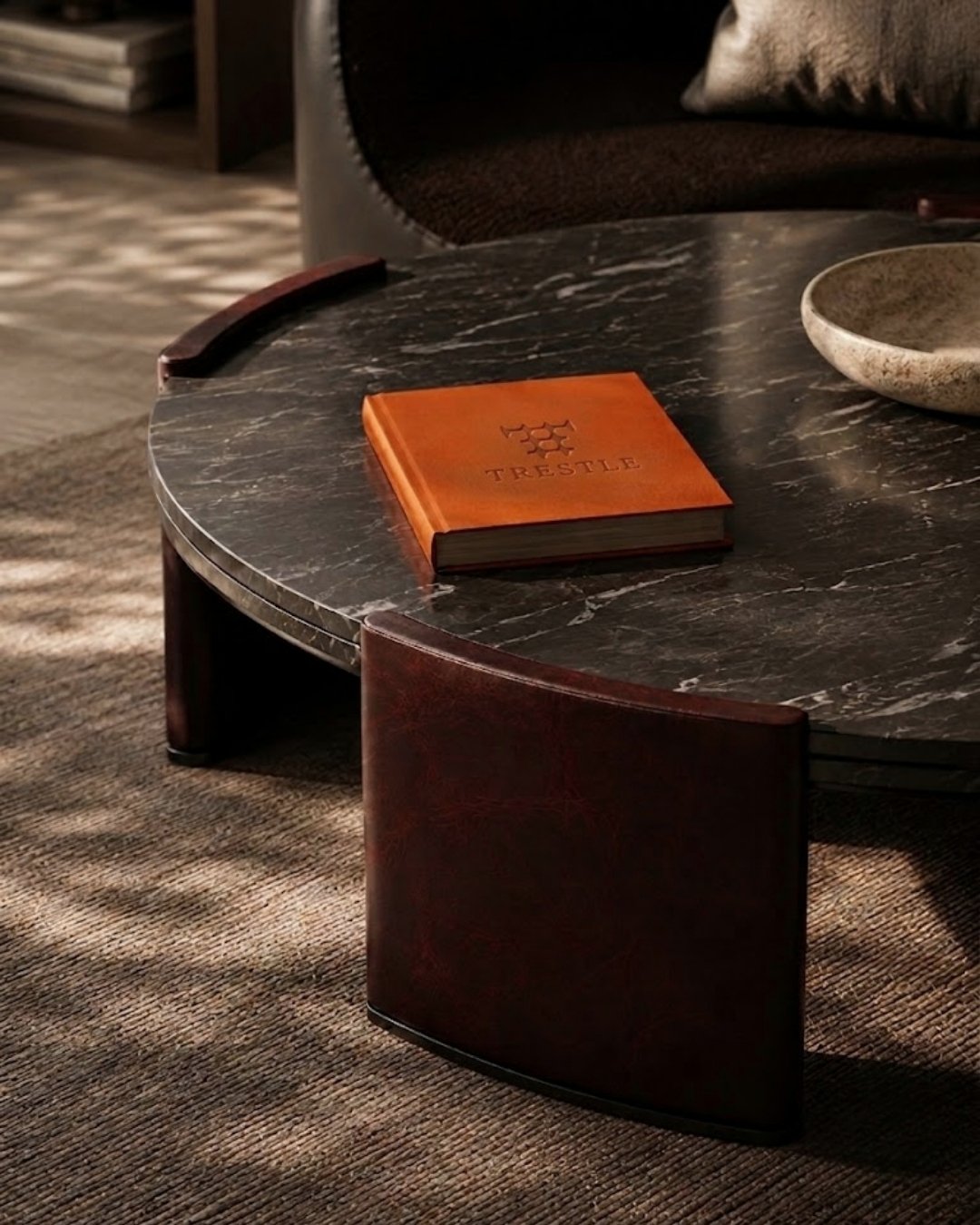
Not what it makes. What it leaves behind.
Trestle makes luxury furniture. It was born out of the S.R. Jindal Group, which means it arrives with a lineage most new brands spend decades trying to manufacture.
The risk in that position is obvious. Lean too hard on the heritage and the brand becomes a museum. Ignore it and you have thrown away the only thing a competitor cannot copy.
The brief I set was to build Trestle as a brand with a lineage rather than a brand with a catalogue. Not what it makes. What it leaves behind.
Luxury is not only what you own. It is what remains.
What will Trestle leave behind?
The social presence was asking the wrong question. Every furniture brand in the category answers what do we make, which is why every furniture brand in the category looks identical.
The strategic move was to make people ask something else instead: what will Trestle leave behind?
That reorders the whole conversation, from product to craft to story to legacy. The furniture stays central. It just stops being the story and becomes the evidence of one.
Trestle’s own purpose, Furniture for Generations, already supported this. The pieces are built to outlast their first room. The communication simply had to catch up with the product.
Five territories, built to travel.
- 01 · The Lineage
Where Trestle comes from. The S.R. Jindal Group to Trestle: history, values and evolution treated as narrative rather than an About-page footnote.
- 02 · The People
Who gives the brand its point of view. Founder perspective, designers and craftsmen, shown as people rather than corporate portraits.
- 03 · The Craft
How an object becomes an heirloom. Materials, joinery, finishing, upholstery. The hand before the product.
- 04 · The Philosophy
What Trestle believes. Typography-led statements on design, longevity and living, published before any furniture appears.
- 05 · The Object
The furniture itself, presented as design objects with character rather than products waiting to be sold.
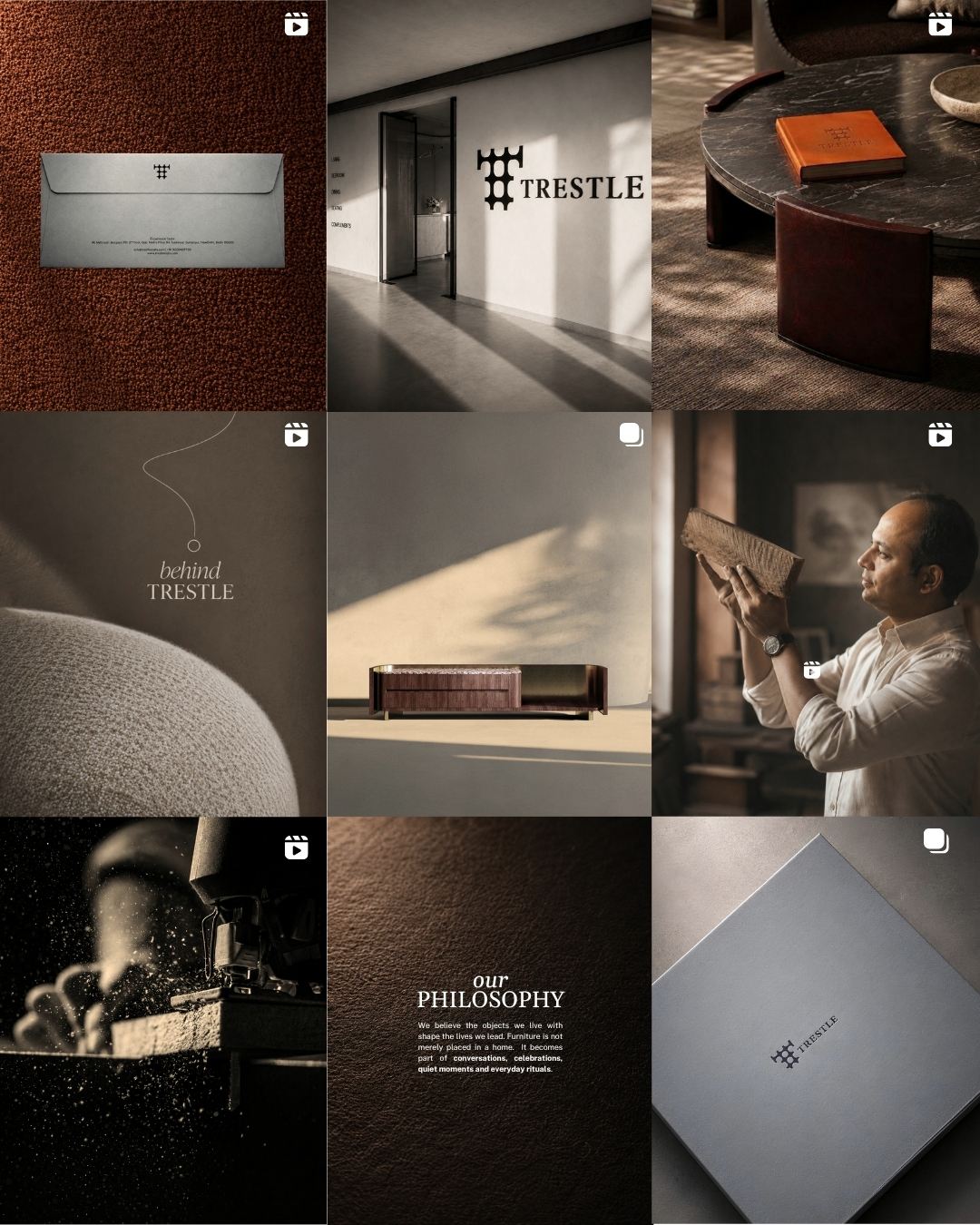
The craft is the luxury.
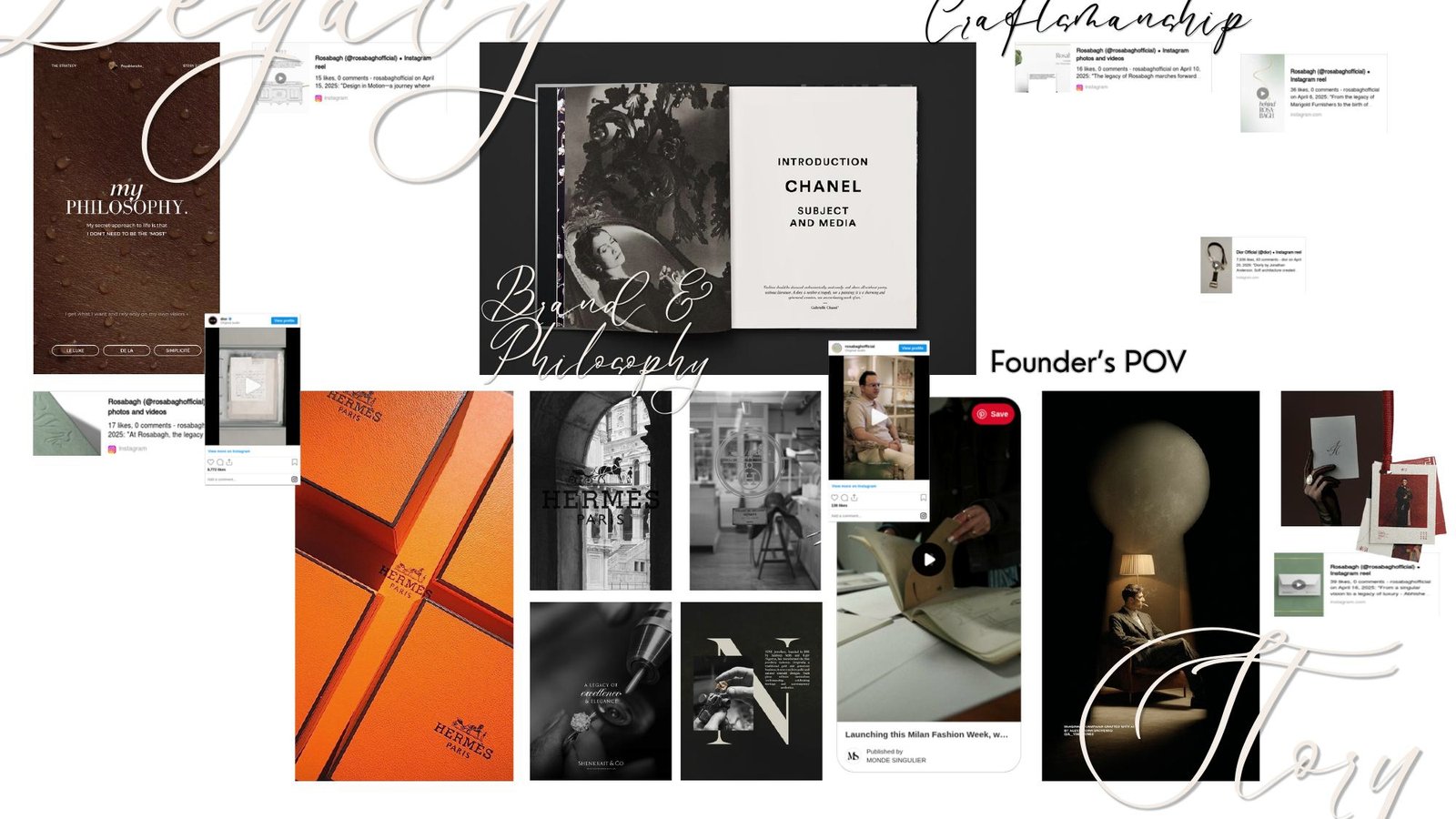
The reference board exists to stop a common failure. Junior strategy borrows the look of a heritage brand and produces a pastiche. The discipline is to extract the operating principle underneath.
Hermès does not photograph craft because craft is charming. It photographs the hand before the product because in that world the craft is the luxury. Chanel leads with typography because a brand world has to speak before a product does. Cartier uses history as a bridge between where it came from and where it is going, which is exactly the move Trestle needs to make with the Jindal lineage.
None of that requires imitating a single frame.
If Trestle were a place, it would feel like an old library in a contemporary home.
Nothing loud, nothing over-polished.
Warm wood. Dark ink. Natural light. Patina, leather, stone, brass, paper. Fine serif typography and quiet rooms. Nothing loud, nothing over-polished, nothing trying too hard to look expensive.
Visually that means warm neutrals and near-blacks, ivory and parchment, subtle bronze, grain and material texture, editorial negative space, macro craft shots and asymmetric layouts. Archival where possible. Cinematic rather than quick.
The point is that the brand should feel as though it already has a history, while it is still building one.
Quiet, not silent. Poetic, not verbose.
Quiet, not silent. Poetic, not verbose. Confident, not boastful. Rooted, not nostalgic. Eternal, not trend-led. Captions written sparse and single-line, in the register of a design monograph rather than a product listing.
Instead of
“Premium handcrafted furniture designed for luxury homes.”
We say
“Made to outlive the room it was made for.”
Instead of
“High-quality materials and expert craftsmanship.”
We say
“Before it enters a home, it passes through many hands.”
Price-led messaging, generic décor language and aggressive calls to action were ruled out entirely. A brand arguing for permanence cannot sound urgent.
Not a tagline. A content philosophy.
Not as a tagline. As a content philosophy.
Every piece of communication has to answer one question, directly or otherwise: why would someone keep this for generations? Through its craft, material, story, design, maker, origin or meaning. If a post cannot answer it, the post does not run.
Trestle isn’t selling furniture for a room. It is making objects with the possibility of becoming part of a family’s story.
A genuine lineage, and a product built to justify the claim.
Most brand work in Indian furniture is product photography with adjectives attached. The category has almost no narrative competition, which means a brand willing to argue a position can own one quickly.
Trestle had the rarest possible asset for that: a genuine lineage, and a product actually built to justify the claim. The strategy did not have to invent anything. It had to stop the brand from wasting what it already had.
PDF · 11 pages · 3.5 MB
Strategy and narrative direction developed for Trestle. Grid layouts shown are proposed planning documents; the brand’s live presence is at @trestle.official and trestleindia.com. Internal strategy documents and commercial detail are not reproduced here.