The drawings were the content.
A studio that finishes the job
Design Essence is an architecture and interior design practice in Sultanpur, New Delhi, founded by Gurpreet Singh. It designs and it also builds: turnkey delivery means the same studio that draws the staircase is responsible for the marble arriving, the fabricator turning up and the handover being clean. That is a materially different promise from a design studio that hands over a set of drawings, and it was almost invisible in how the brand presented itself.
Beautiful, competent, and completely interchangeable.
Scroll any city’s architecture studios and you will find the same feed repeated: a render, a render, a detail shot, a render. Beautiful, competent, and completely interchangeable.
The reason is structural. The render is the only asset that arrives already finished and already approved. Everything else, the sketch, the plan, the material board, the argument, sits in a project folder and is considered internal.
But the render is also the least persuasive thing a studio owns. A prospective client cannot judge a render; they can only like it. What they are actually trying to work out, in a decision that will cost them a year and a large amount of money, is whether this studio thinks properly. That evidence is sitting in the folder nobody publishes.
So the strategy was simple to state and unusual to execute. Publish the process.
Putting a floor plan in front of a general audience is supposed to be a mistake.
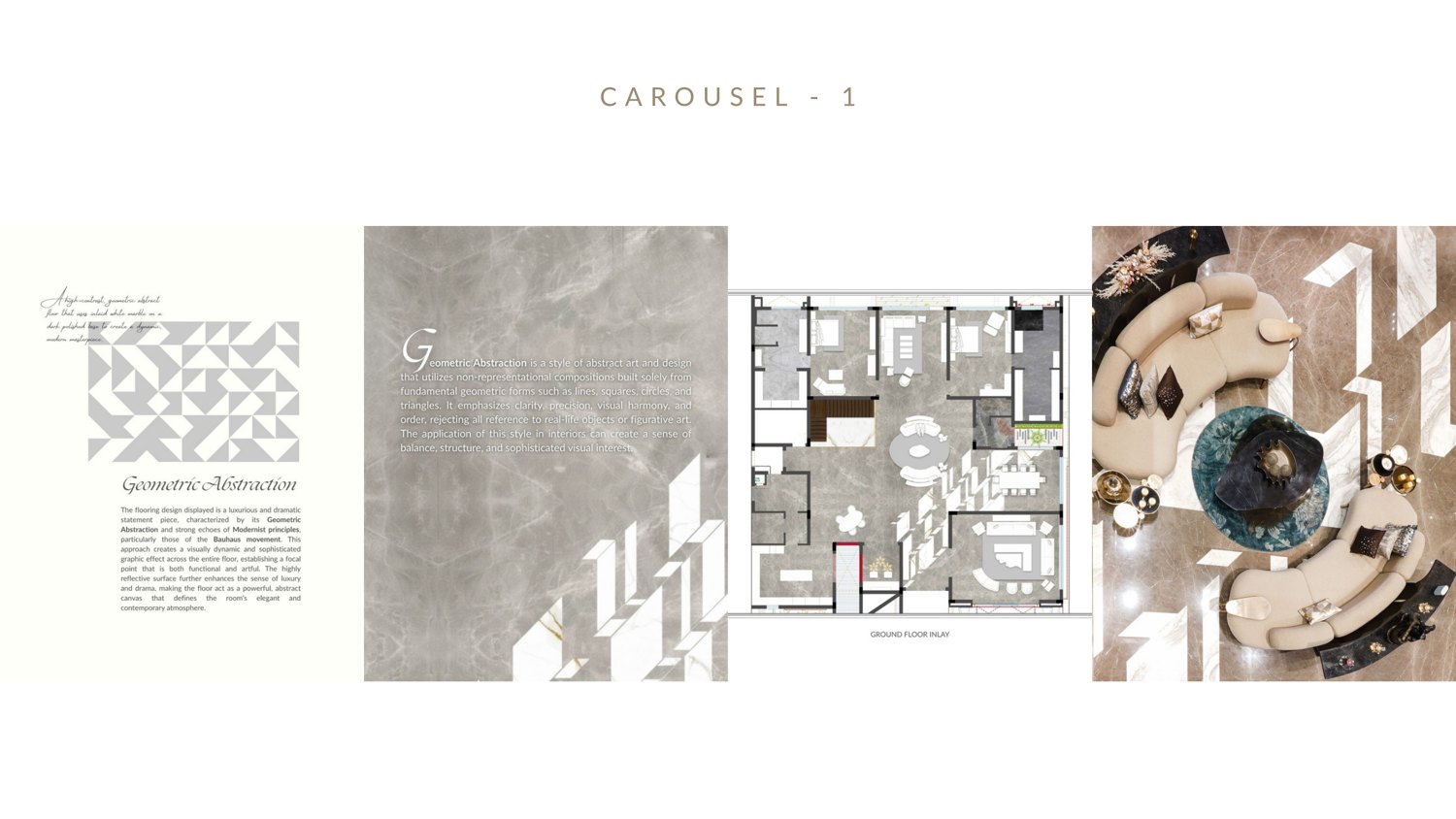
The clearest version of the principle is a carousel called Geometric Abstraction, built around a high-contrast Bauhaus-inflected marble floor. It opens on the pattern. Slide two is the ground floor plan, unretouched, with room labels intact. Only after that does the finished room appear.
Putting a floor plan in front of a general audience is supposed to be a mistake. It is technical, it is unglamorous, and the standard advice is that nobody wants to read one. In practice it did the opposite of what the advice predicts, because it silently answers the only question that matters: this was designed, deliberately, by people who work in plan before they work in render.
Untitled work is unrepeatable work.
A render captioned luxury living room is a photograph; the same room called something is a concept, and a concept can be referenced, saved, asked for by name and eventually sold.
So every project on the grid was named, and the names were written to sound like a studio rather than like a caption.
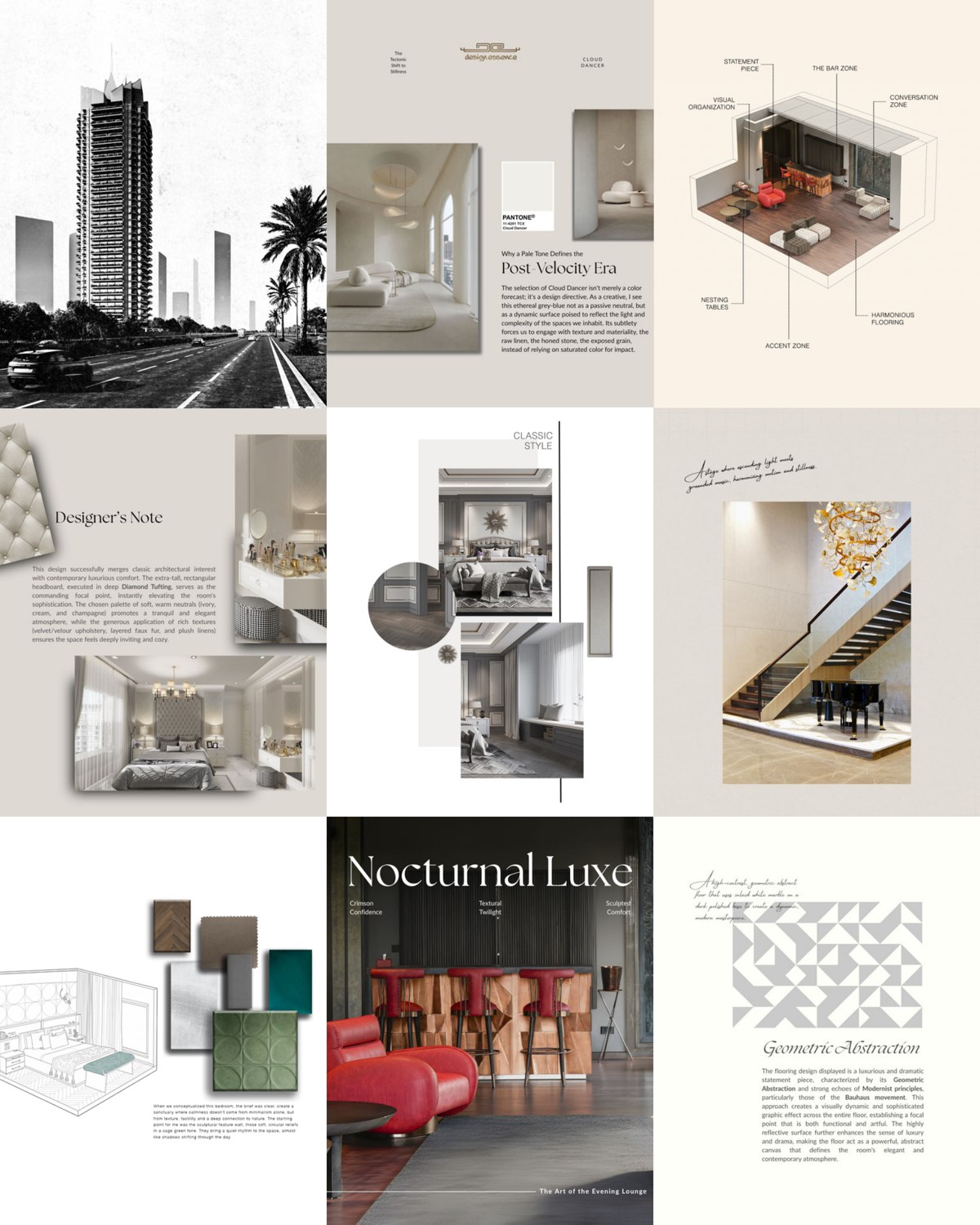
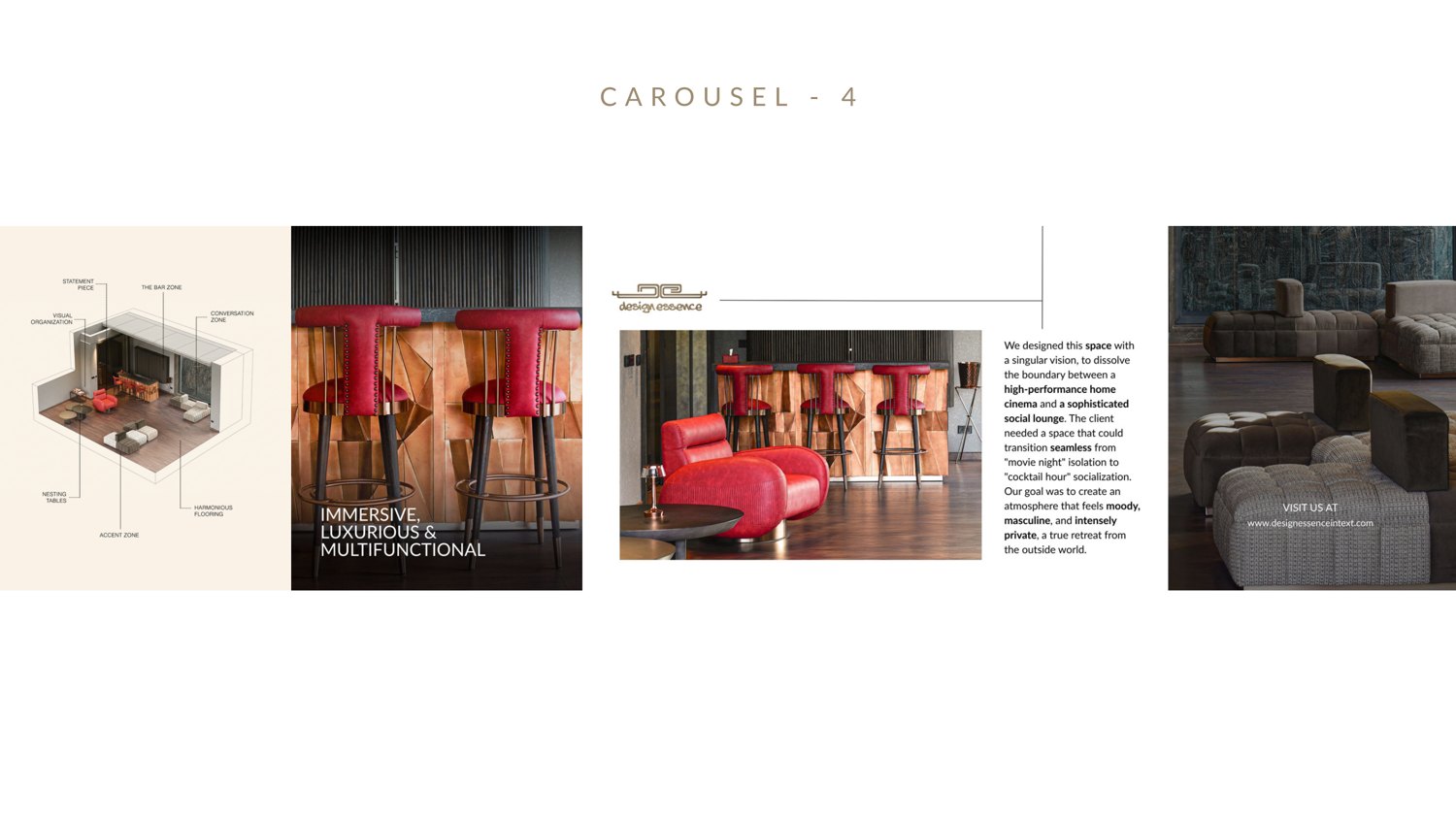
An evening lounge in crimson and smoked oak. Crimson confidence, textural twilight, sculpted comfort. Sold as a mood, not as a bar counter.
Pantone's Cloud Dancer read not as a colour announcement but as a design directive: a pale tone that forces a room to carry its interest in texture and material instead of saturation.
Modernist floor patterning treated as the room's focal artwork, with the plan shown as proof of intent.
A bedroom in soft neutrals and fluid form. The restraint is the point, and the name makes the restraint legible.
The Pantone piece is worth isolating, because it is the difference between reporting a trend and having an opinion about one. Every interiors account announced the colour of the year. Design Essence argued about what it means for a room, and an argument is authority in a way that an announcement never is.
A homeowner is deciding who they can let into their house for a year.
A homeowner choosing a turnkey studio is not comparing portfolios. They are deciding who they can let into their house for a year. That decision is made about a person, not a practice, and the person was nowhere in the feed.
So Gurpreet Singh went into it: a founder carousel written in first person, placed beside the staircase project rather than in a separate corporate post, so the opinion and the evidence sit on the same screen.
The most luxurious detail in a home isn’t the finish, but the intentional section where the homeowner’s most private passion is given physical enclosure.
Gurpreet Singh · Founder, Design Essence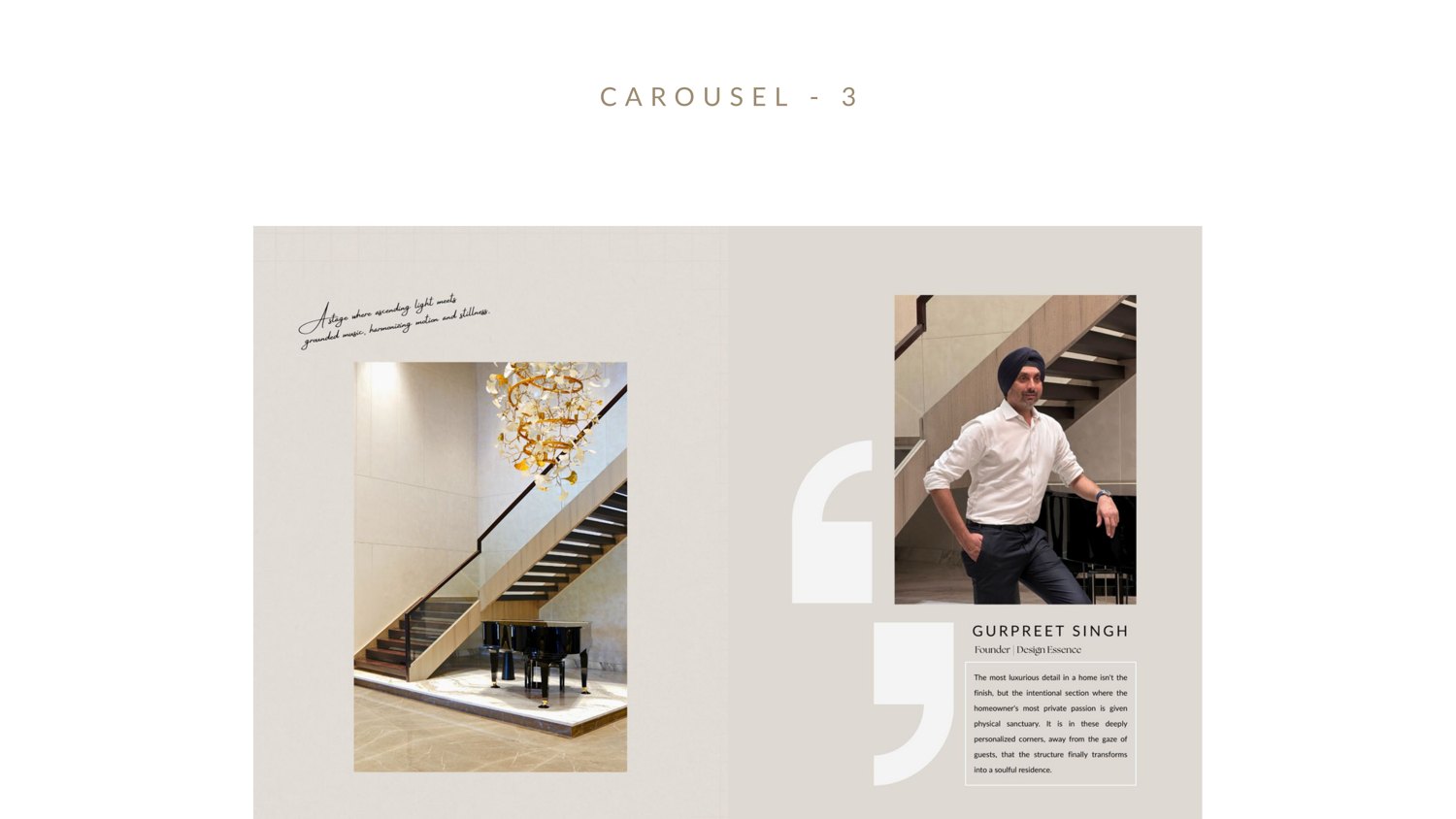
Engagement questions are usually filler. The audience can smell it.
One frame on the grid is a pencil section with a single line of copy over it: Details often decide the story of a project. Which detail, if overlooked, can quietly break the entire design narrative?
Engagement questions are usually filler, and the audience can smell it. This one worked because it is a question practising architects genuinely argue about, and because the account asking it had spent the previous eight posts proving it had a view. The comment section becomes a small professional conversation rather than a string of emojis, and the people in it are exactly the people who specify.
The writing is for the reader. The array underneath is for the search engine.
Every caption in the docket carries a bracketed keyword array beneath it. Sculptural staircase design. Luxury foyer architecture. Three dimensional interior zoning. Contemporary urban living. Bespoke texture palette.
It is tedious work and nobody praises it. It is also why a studio in Sultanpur can be found by someone searching for a phrase it never occurred to the studio to rank for. The writing is for the reader. The array underneath is for the search engine. Both had to sit in the same post without the second one ruining the first.
I stopped asking a client for content and started looking at what they already produce.
Design Essence is the account where I stopped asking a client for content and started looking at what they already produce.
Architecture studios sit on the richest raw material of any industry I have worked with. Plans, sections, axonometrics, material boards, site photographs, arguments between partners. Almost all of it is treated as internal, and almost all of it is more persuasive than the render that eventually replaces it.
The strategy did not require a shoot, a budget or a single new asset. It required going through the project folder and deciding that the thinking was the product.
Content and social strategy for Design Essence, produced during my time at OneDigital and continued at Markethink, 2025 to 2026. Grids, dockets and creative shown are from decks I wrote and directed. Project imagery belongs to Design Essence. No client-confidential commercial detail is reproduced here.